
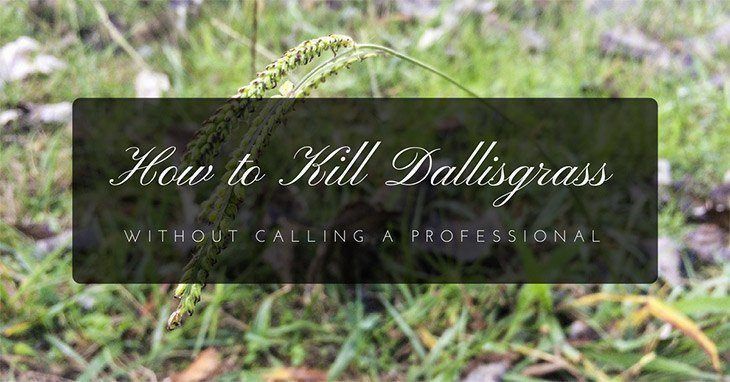
Seeing coarse, ugly clumps of dallisgrass disrupt your lawn can be frustrating. Unlike other weeds, its tough root system means a simple spray or pull often isn't enough for permanent removal. Successfully controlling dallisgrass requires correct identification to avoid wasting time on the wrong methods, followed by a well-timed strategy that targets both existing plants and future seeds.
Editor’s note: This guide discusses herbicide use for lawn care. Always read and follow the product label for your specific turf type, application rates, required personal protective equipment (PPE), and any restrictions on re-entry or reseeding. Pay close attention to wind conditions during application to prevent spray from drifting onto desirable garden plants.
Key Takeaways
- First, confirm you have dallisgrass by its distinct clumping growth and unique seed head; it's a perennial and is often mistaken for crabgrass, which is an annual.
- A pre-emergent herbicide in early spring stops new seeds, but it will do nothing to control the established clumps already growing from underground rhizomes.
- Expect to make multiple post-emergent herbicide applications, as dallisgrass's robust root system almost always requires follow-up treatments to kill it completely.
- After killing a clump, you will have a bare patch that needs to be reseeded, otherwise new weeds will quickly take over the empty space.
First, Confirm It’s Dallisgrass
1. The Telltale Signs: Clump Growth and Coarse Texture
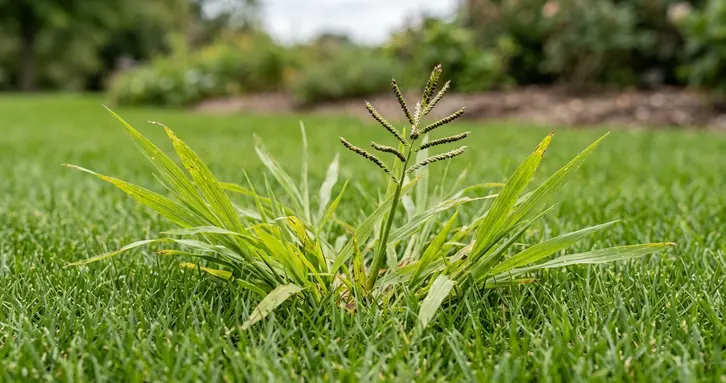
Dallisgrass typically forms distinct, tough clumps that can stand out in a lawn, often reaching up to 6 inches in height. Its leaves are noticeably coarse-textured and wider than most desirable turfgrasses, usually measuring about 1/4 to 1/2 inch across. You might also observe a lighter, yellowish-green color compared to your existing lawn, making these clumps quite visible. This clumping growth habit is a key identifier, as dallisgrass is a perennial bunchgrass that doesn't spread by stolons like some other weeds.
A common mistake is confusing dallisgrass with crabgrass. While both have coarse textures, dallisgrass grows in more upright, persistent clumps from a central crown. Crabgrass, in contrast, often spreads more prostrate and can root at nodes along its stems. Correct identification is vital for choosing the right control method.
2. Examining the Seed Head: The Definitive Clue
Dallisgrass seed heads are a definitive identifying feature, typically appearing from late spring through fall, especially in summer and early fall. Look for 3 to 7 (most commonly 3-5) finger-like branches, called racemes, which are arranged alternately along a central stem. These racemes are usually 2 to 4 inches long. The individual spikelets, or seeds, are about 1/8 inch long, flattened, oval-shaped, and often have dark spots, covered with fine, silky hairs. Gently feel them for this texture.
This alternate arrangement of racemes, rather than radiating from a single point, is a critical distinction from similar weeds like crabgrass. For further confirmation, observe the short, dark, fuzzy ligule at the collar of the leaf blade where it meets the stem. Accurate identification is vital to avoid ineffective control methods.
3. Dallisgrass vs. Crabgrass: Avoiding a Common Mistake
Dallisgrass (Paspalum dilatatum) is a perennial bunchgrass that regrows from its roots and rhizomes annually. This is a key difference from crabgrass (Digitaria spp.), which is an annual grass that germinates from seed each year. Misidentifying these weeds is a common error that leads to ineffective control, as their life cycles require different herbicide chemistries and application timings.
To distinguish them, look closely at the ligule, the membrane where the leaf blade meets the stem. Dallisgrass has a prominent, hairy ligule and often a purplish-black spot at the leaf base. Its seed heads are typically 3-7 spike-like racemes arranged alternately along a central axis, resembling a zipper. Crabgrass, on the other hand, has a jagged, membranous ligule and wider, flatter leaves. Its seed heads feature 2-10 finger-like spikes originating from a single point at the stem's top. Dallisgrass forms tight clumps, while crabgrass spreads more openly and can root at its stem nodes.
Choosing Your Dallisgrass Removal Strategy
1. Manual Removal: For Minor Infestations Only
Manual removal is a practical approach for tackling small, isolated dallisgrass plants or minor infestations. The perennial nature of dallisgrass, with its short, thick rhizomes, means that success hinges on extracting every piece of the root system. Even small fragments left behind can regenerate, leading to regrowth.
To ensure thorough removal, work when the soil is moist, which helps loosen the soil and makes it easier to pull out the entire root ball. Use a spade, trowel, or weeding fork to carefully loosen the soil around the clump, then gently lift the plant. Always inspect the excavated area to confirm no root or rhizome pieces remain. For more comprehensive strategies, refer to our main guide on how to kill dallisgrass.
2. Pre-Emergent Herbicides: Stopping New Seeds from Sprouting
Pre-emergent herbicides are a foundational tool for controlling dallisgrass by preventing new plants from sprouting from seed. Products with active ingredients like prodiamine or dithiopyr create a chemical barrier in the soil, disrupting cell division in germinating seeds to prevent root and shoot development. These herbicides are not effective against existing dallisgrass plants emerging from rhizomes https://ipm.ucanr.edu/PMG/PESTNOTES/pn7491.html.
Apply pre-emergents in late winter to early spring, before soil temperatures consistently reach 60-65°F at a 2-4 inch depth. Most provide 3 to 5 months of control; always follow the product label for specific rates and safety. Remember to avoid reseeding desired turf for 3 to 4 months afterward, as it will inhibit their germination. For typical reseeding timelines, consult our guide on how long for grass seed to germinate.
3. Post-Emergent Herbicides: Killing Established Clumps
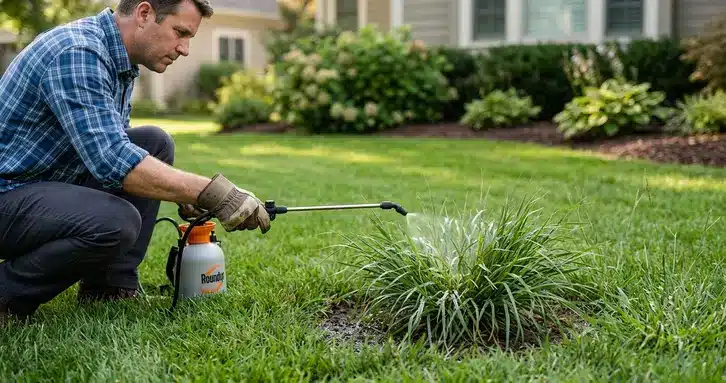
Post-emergent herbicides are used to kill dallisgrass clumps that have already emerged. Non-selective options like glyphosate are highly effective for spot treatment but will kill any desirable turfgrass they contact, requiring reseeding.
For selective control, warm-season grasses such as Bermudagrass and Zoysiagrass have options, including sulfonylurea herbicides like trifloxysulfuron-sodium. Control in cool-season lawns like fescue is very challenging, with few reliable selective products that won't injure the turf. Regardless of the product, plan for multiple applications, typically 2 to 3, spaced 2 to 4 weeks apart, to thoroughly deplete the plant's robust rhizome system for effective dallisgrass control. Always add a non-ionic surfactant to improve herbicide penetration through the waxy leaves. When applying, use a quality weed sprayer to ensure uniform coverage. Read product labels carefully and wear appropriate personal protective equipment (PPE).
4. Selective vs. Non-Selective: What’s Safe for Your Lawn?
For dallisgrass control, choosing between selective and non-selective herbicides depends on your lawn type and the extent of the infestation. Non-selective options, such as glyphosate, kill nearly all plants they contact, including desirable turfgrass. These are best for spot treatments of isolated dallisgrass clumps or for clearing areas before reseeding, but require precise application to prevent damage to healthy grass.
Selective herbicides are formulated to target specific weeds while minimizing harm to your lawn. For warm-season turfgrasses like Bermuda or Zoysia, products containing active ingredients such as trifloxysulfuron-sodium can be effective, often requiring multiple applications. However, controlling dallisgrass in cool-season lawns, including fescue or bluegrass, is significantly more challenging due to the lack of selective options that won't injure the turf. Always read product labels carefully for proper application rates, timing, and essential personal protective equipment (PPE).
Execution and Lawn Recovery
1. Timing is Everything: When to Apply Herbicides for Best Results
Effective dallisgrass control depends heavily on precise timing. Apply pre-emergent herbicides in early spring, specifically when soil temperatures consistently measure 50-55°F at a 2-inch depth. This application must occur before soil temperatures reach 60-65°F, which triggers dallisgrass seed germination.
For existing dallisgrass, post-emergent herbicides are most effective when the plant is actively growing, from late spring through early fall. If you're using selective herbicides on warm-season turf, late summer to early fall is optimal. This timing allows the herbicide to move more effectively into the plant's root system as it translocates energy to its rhizomes for winter storage. Multiple applications, typically 2 to 4 weeks apart, are almost always required for complete eradication. Always include a non-ionic surfactant to help the herbicide penetrate dallisgrass's waxy leaves, and meticulously follow all product label instructions.
2. The Follow-Up Application: Why One Spray Is Never Enough
Dallisgrass is a persistent perennial, so a single herbicide application rarely achieves complete eradication. Its ability to regenerate from underground rhizomes and an extended germination period mean follow-up treatments are essential. These target new growth from surviving rhizomes or late-germinating seeds that emerge after the initial spray.
Plan for multiple applications, typically two to three, spaced according to your product label, usually 14 to 28 days apart. Always consult the label for precise intervals, as applying too frequently or at excessive rates can injure desirable turfgrass. For optimal uptake, ensure dallisgrass is actively growing and not stressed by drought or extreme heat. Remember to wear appropriate personal protective equipment (PPE) during all applications.
3. Repairing the Bare Spots Left Behind
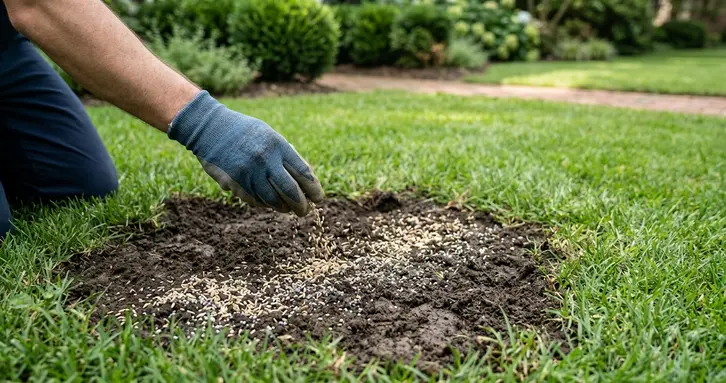
After eliminating dallisgrass, especially with a non-selective herbicide like glyphosate, wait 7 to 21 days before reseeding. This allows the herbicide to degrade, ensuring better germination. Prepare the bare spot by clearing debris, loosening soil 4-6 inches deep, and incorporating organic matter or a phosphorus-rich starter fertilizer.
Reseeding timing depends on your grass type. Cool-season grasses do best in late summer to early fall (August-September) or early spring (March-April), when soil temperatures are 50-65°F. For warm-season grasses, reseed from late spring to early summer (April-July) when soil temperatures consistently exceed 65°F. Seed 1/8 to 1/4 inch deep, then water lightly and frequently to maintain consistent moisture until germination.
4. Long-Term Prevention: How to Keep It from Coming Back
Long-term dallisgrass prevention requires an Integrated Weed Management (IWM) approach, prioritizing a dense, healthy turf. Promote vigorous growth with proper fertilization, cultivar selection, and overseeding. Maintain cool-season fescue at 3-4 inches to shade the soil, and use deep, infrequent irrigation to develop strong turf roots, discouraging dallisgrass that thrives in shallow, moist conditions. Address soil compaction with annual core aeration.
Complement these cultural practices with annual pre-emergent herbicides (dithiopyr or prodiamine) in early spring. Apply when soil temperatures consistently reach 50-55°F at a 4-inch depth, before they hit 60-65°F, to prevent new seeds from germinating University of California Statewide IPM Program. Pre-emergents only prevent seed germination and must be applied annually; they do not control existing plants.
Final Thoughts
Controlling dallisgrass is more about consistent strategy than a single treatment. Once you remove the existing clumps, the focus must shift to long-term lawn health. A dense, properly watered, and well-fed lawn is your best defense, as it leaves no room for this persistent weed to return. Don't just fight the weed; build a lawn that's inhospitable to it in the first place.
Try this method in your yard this week.
About the Author
Julia Wilson is a hands-on gardener and editor for LeekGarden who focuses on practical, research-aware guidance for real home gardeners. Her writing combines field-level observation, common homeowner mistakes, and extension-style references to make lawn and garden decisions easier to apply.
About Us
LeekGarden.com is a passionate gardening blog created by Julia Wilson, a dedicated gardener from Texas who started her journey with a small vegetable garden to stretch her family's grocery budget while raising two kids. Here, you'll find practical tips, honest product reviews (like the best leaf blowers and hand pruners), and real-life stories from successes and failures in the garden. Whether you're a beginner dipping your toes into soil or a hobby gardener seeking weekend projects, this site aims to inspire you to connect with nature, grow your own food, and enjoy the therapeutic benefits of gardening. Pull up a chair, explore the guides, and get your hands dirty – let's grow together!