
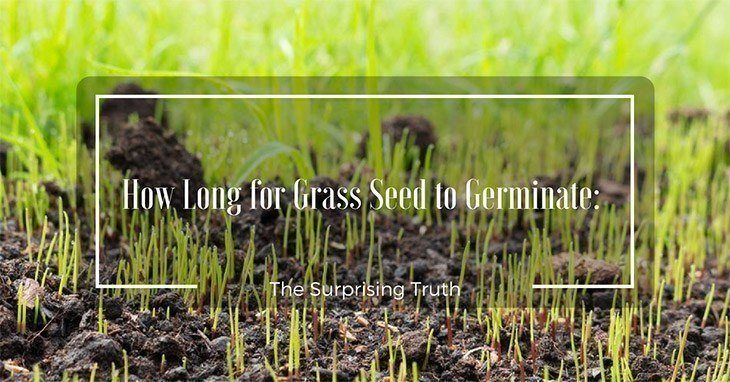
Watching a bare patch of soil for new grass can test anyone's patience. How long for grass seed to germinate depends heavily on the grass type, but the two factors you can control are soil temperature and consistent moisture. Getting these right is the difference between a lush new lawn and wasted seed.
Key Takeaways
- Kentucky Bluegrass can take up to 30 days to sprout, so don't stop watering just because the faster ryegrass has appeared in a seed mix.
- Planting seed when the soil is too cold is a common mistake that leaves it vulnerable to rot or pests before it can even start growing.
- The top layer of soil must stay consistently moist, like a wrung-out sponge; letting it dry out even once can kill the germinating seed.
- Simply scattering seed on unprepared ground often fails because good seed-to-soil contact is essential for the seed to absorb water.
Germination Timelines by Grass Type
1. Cool-Season Grasses: Ryegrass, Fescue, and Bluegrass
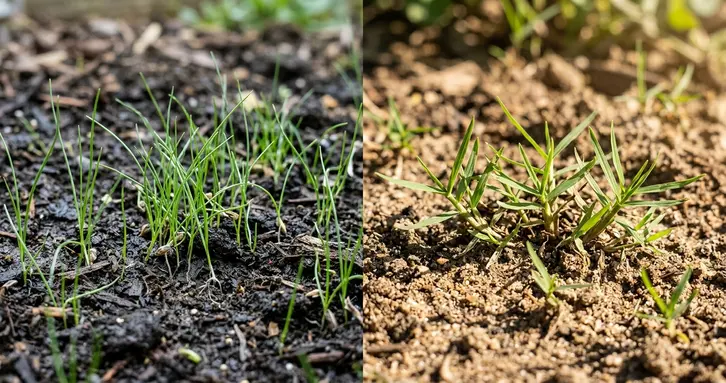
Cool-season grasses, including Perennial Ryegrass, Tall Fescue, and Kentucky Bluegrass, germinate best when soil temperatures are consistently between 50-65°F (10-18°C) at a depth of 2-4 inches. Perennial Ryegrass is the quickest, typically emerging in 5-10 days. Tall Fescue follows, generally germinating within 7-14 days. Kentucky Bluegrass is the slowest, often requiring 14-30 days, which makes it particularly susceptible to desiccation and competition from weeds. For all these types, keeping the top 1/2 inch of soil consistently moist is paramount, often requiring light watering 2-4 times daily until seedlings establish.
2. Warm-Season Grasses: Bermuda, Zoysia, and Centipede
Warm-season grasses germinate best with sustained soil temperatures between 65-80°F. Hulled Bermuda grass typically emerges in 7-14 days, Zoysia grass in 14-21 days, and Centipede grass, the slowest, takes 14-28 days. Due to these extended timelines, the top 1/4 inch of soil must remain consistently moist, often requiring multiple light waterings daily.
Vigilant moisture management is crucial; allowing the seedbed to dry out is a common cause of failure, while overwatering can lead to fungal issues or displace seeds. For centipede grass, ensure planting allows ample time for establishment before cooler temperatures arrive, given its poor cold tolerance.
3. Why Seed Mixes Have Staggered Germination Times
Grass seed mixes are intentionally formulated with species that have different germination timelines. This is because each grass type, such as Perennial Ryegrass (5-7 days) and Kentucky Bluegrass (14-30 days), has its own biological rhythm and optimal conditions. This staggered approach ensures that faster-germinating species provide quick initial ground cover and help with erosion control, while slower-germinating species establish over a longer period.
This strategy maximizes the chances of successful establishment, contributing to the lawn's long-term density and resilience. Homeowners must maintain consistent soil moisture for the entire germination window of the slowest component, typically 3-4 weeks or more, to ensure all seeds successfully emerge. Reducing watering too soon is a common mistake that can lead to failure for the later-sprouting varieties.
The Three Keys That Control Germination Speed
1. Soil Temperature: The Most Important Germination Trigger
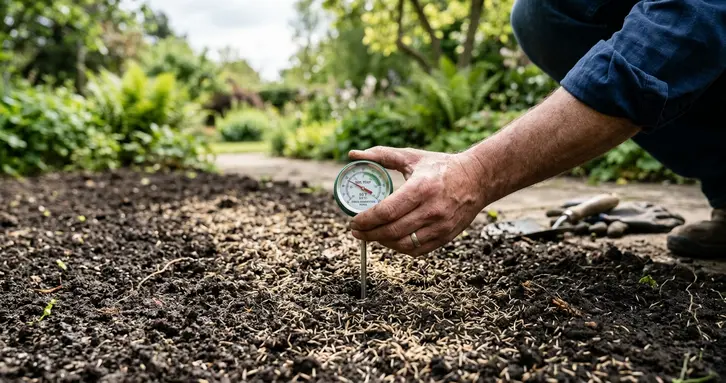
Soil temperature is the most critical factor for successful grass seed germination, directly controlling the metabolic rate and enzyme activity within the seed. Each grass species has a specific optimal range. Cool-season grasses like Perennial Ryegrass, Tall Fescue, and Kentucky Bluegrass prefer soil temperatures between 50-65°F (10-18°C), while warm-season types such as Bermuda grass and Zoysia thrive in 65-80°F (18-27°C).
Planting when soil temperatures are too low is a common mistake that significantly delays germination, increasing the risk of seed rot, disease, and predation before emergence. Always use a soil thermometer to confirm temperatures at a 2-4 inch depth before planting.
2. Consistent Moisture: The Non-Negotiable Requirement
For grass seed to germinate successfully, consistent moisture in the soil is non-negotiable. The process begins with the seed absorbing water (imbibition), activating enzymes for growth. Once this starts, any period of drying out will typically kill the developing embryo, leading to irreversible failure.
Maintain the top 1/4 to 1/2 inch of soil consistently moist, like a wrung-out sponge, but never saturated. This often requires light watering 2 to 3 times daily for 5-10 minutes, especially in warm or dry weather. Use gentle irrigation to prevent washing away seeds, and ensure excellent seed-to-soil contact. A thin top-dressing of peat moss or compost can help retain moisture.
3. Seed-to-Soil Contact: Why It’s Essential for Water Uptake
Optimal seed-to-soil contact is fundamental for germination because it ensures the seed can consistently absorb water through imbibition. Without direct contact, air pockets prevent the continuous moisture film necessary for water to move into the seed via capillary action and osmosis. This leads to desiccation, even if the surrounding soil is moist. To achieve this, prepare a firm, fine seedbed. After spreading seed, lightly rake it into the top 1/4 inch of soil, then use a lawn roller to press seeds firmly into place without over-compacting. A thin layer of topdressing, such as peat moss or compost, can further aid moisture retention and help keep birds from eating grass seed.
How to Prepare for the Fastest Possible Germination
1. Prepping the Ground for Optimal Contact and Drainage
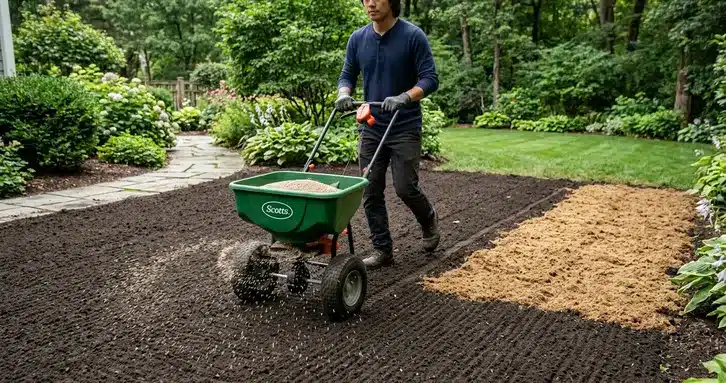
Optimal seed-to-soil contact is crucial for consistent moisture absorption, which triggers successful germination. Prepare a firm seedbed where your foot sinks no more than 1/2 inch. After broadcasting, lightly cover seeds 1/4 to 1/2 inch deep, then gently roll or tamp the area to maximize contact for uniform emergence.
Proper drainage prevents water pooling and disease. For heavy clay soils, incorporate 1 to 2 inches of organic matter into the top 4 to 6 inches. Heavily compacted soil benefits from core aeration. Grade the area with a slight 1-2% slope away from structures for even runoff. A pre-seeding soil test can guide pH or nutrient amendments.
2. Spreading Seed and Applying a Light Top Dressing
For even coverage, divide your grass seed into two equal portions and apply each portion in perpendicular directions using a broadcast or drop spreader. Calibrate spreaders according to manufacturer instructions and lightly rake the area afterward to ensure good seed-to-soil contact.
A light top dressing is beneficial, creating a stable microenvironment that retains moisture, moderates soil temperature, and protects seeds. Apply a very thin layer (1/8 to 1/4 inch) of fine compost or peat moss, just enough to lightly cover the seed. If using certified weed-free straw, aim for about one bale per 1,000 square feet, leaving roughly 50% of the soil visible. Avoid thick layers, which can impede seedling emergence or block sunlight.
3. The Correct Way to Water New Grass Seed
New grass seed requires consistent moisture in the top 1/2 to 1 inch of soil to germinate successfully. The soil should feel like a wrung-out sponge, moist but never saturated or waterlogged. Initially, water lightly and frequently, typically 2 to 4 times a day for 5 to 10 minutes, adjusting for temperature, sun, and soil type. This frequent, shallow watering is crucial because seeds must constantly imbibe water to initiate germination; any dry period can halt the process and cause failure.
As seedlings reach 1-2 inches tall, gradually reduce watering frequency while increasing duration to encourage deeper root development. Overwatering can displace seeds and cause fungal issues, while underwatering is a common cause of seedling death. For large areas, sprinklers ensure even coverage; if you don't have a sprinkler system, there are best ways to water your lawn without one.
Troubleshooting Slow or Patchy Results
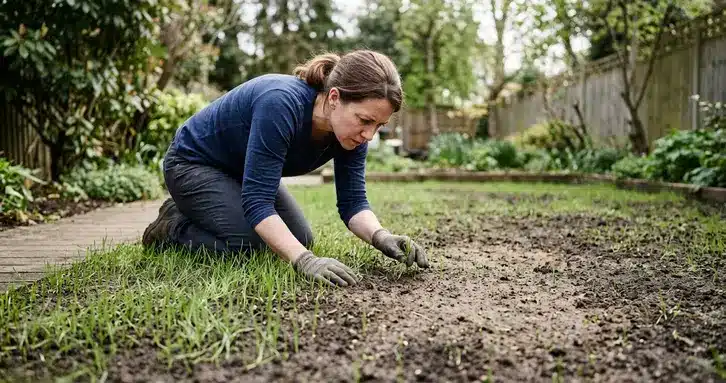
1. A Patience Checklist: When to Wait and When to Worry
Grass seed germination timelines vary significantly by species, so patience is crucial. For instance, Perennial Ryegrass may emerge in 5-7 days, while Kentucky Bluegrass can take 14-30 days. Warm-season varieties like Bermuda grass typically sprout in 7-14 days, with Zoysia taking 14-21 days.
The most common delays stem from suboptimal soil temperatures (cool-season: 55-65°F; warm-season: 70-80°F) or inconsistent moisture in the top 1/4 inch of soil. Poor seed-to-soil contact or incorrect planting depth (1/4 to 1/2 inch) also impede emergence. Always wait for the maximum expected germination period for your specific grass type before assuming failure. If results are still patchy, gently inspect the seedbed for seed presence, depth, and contact, then correct any underlying issues before considering reseeding.
2. Identifying Common Failure Points: Washout, Pests, or Bad Seed
Slow or patchy grass seed germination often stems from three common issues. Washout occurs when heavy rain or excessive irrigation dislodges seeds, creating bare streaks, particularly on sloped or compacted areas. Light, frequent watering helps prevent this. Pests like birds, ants, or rodents can consume seeds or emerging seedlings; inspect the area for active feeding or disturbed soil. A light layer of straw mulch (no more than 1/8 inch) can offer some protection. Finally, bad seed—seed with low viability or purity—is a frequent cause of failure. Always check the seed tag for a germination percentage of 80% or higher and a recent test date, as viability naturally declines over time.
3. First Care for New Sprouts to Ensure Survival
Once grass sprouts emerge, consistent moisture in the top inch of soil is vital for the first 2-3 weeks, keeping it moist but not waterlogged. Gradually shift to less frequent, deeper watering, aiming for about 1 inch per week, including rainfall. This encourages roots to grow downwards, establishing a more resilient turf lawn establishment care. Mowing should wait until sprouts are 3-4 inches tall; use a sharp blade set to 2.5-3 inches, never removing more than one-third of the blade height. Avoid applying broadleaf herbicides until the new grass is well-established, typically after 2-3 mowings or 60 days, and limit foot traffic for 4-6 weeks to prevent compaction.
Final Thoughts
Successful grass seed germination isn't about luck; it's about providing three simple things: the right soil temperature, consistent moisture, and direct seed-to-soil contact. Before you reseed a patchy area or give up, double-check these fundamentals. Patience is key, especially with slower varieties, but getting the environment right from the start is what truly ensures a thick, healthy lawn.
Ensure optimal germination by monitoring soil temperature with a reliable soil thermometer – it's the secret to a thriving lawn! If this guide helped you understand your grass seed's journey, share it with a fellow gardener or show us your sprouting success in the comments!
About the Author
Julia Wilson is a hands-on gardener and editor for LeekGarden who focuses on practical, research-aware guidance for real home gardeners. Her writing combines field-level observation of common homeowner mistakes with extension-style references to make lawn and garden decisions easier to apply.
About Us
LeekGarden.com is a passionate gardening blog created by Julia Wilson, a dedicated gardener from Texas who started her journey with a small vegetable garden to stretch her family's grocery budget while raising two kids. Here, you'll find practical tips, honest product reviews (like the best leaf blowers and hand pruners), and real-life stories from successes and failures in the garden. Whether you're a beginner dipping your toes into soil or a hobby gardener seeking weekend projects, this site aims to inspire you to connect with nature, grow your own food, and enjoy the therapeutic benefits of gardening. Pull up a chair, explore the guides, and get your hands dirty – let's grow together!